Badminton Shuttlecock Speed 77 78 79: What's The Difference & How To Choose
2026/07/03
Aeroplane
Table of Contents
- Introduction
- What Do Shuttlecock Speed 77, 78, 79 Mean? (Basic Knowledge for Beginners)
- Shuttlecock Speed 77 vs 78 vs 79: Exact Differences (Core Comparison Table)
- How Environment Affects Shuttlecock Speed Selection (Solve Scenario Pain Points)
- Ultimate Selection Guide: Choose 77/78/79 By Player Level & Usage
- Frequently Asked Questions (FAQ — Google Featured Snippet Target)
- Final Summary & Quick Cheat Sheet
Introduction
Your smash lands way out of the baseline? Your clear floats sluggishly and kills your rally rhythm? If this frustration sounds familiar, you’re almost certainly using the wrong shuttlecock speed — the confusing 77, 78, and 79 grain codes printed on every shuttle tube hold all the answers.
For millions of global badminton players, these three numbers remain a total mystery. Most people grab shuttlecocks at random without factoring in indoor temperature, venue altitude, skill level, or match type. The result? Inconsistent flight, constant unforced errors, wasted money on ill-fitting birdies, and disrupted skill development for new players.

Let’s break down the basics first: 77, 78, and 79 are industry-standard grain weight markers that directly control shuttle flight speed, weight, air resistance, and landing stability. The core rule is simple: the higher the number, the heavier and faster the shuttlecock.
This complete guide will eliminate all your guesswork. We’ll compare 77 vs 78 vs 79 side by side, explain how environmental conditions alter shuttle performance, share a one-click selection cheat sheet for all player levels, and answer every common question players search online. By the end, you’ll pick the ideal shuttle speed for every training session, club game, and formal competition.
What Do Shuttlecock Speed 77, 78, 79 Mean? (Basic Knowledge for Beginners)
Before diving into comparisons, it’s critical to master the universal industry standard behind these speed labels, recognized by all major badminton brands and BWF equipment certification guidelines. You can also check the official BWF shuttlecock standard page at https://www.aeroplanebadminton.com/bwf-approved-shuttlecock-standards/.
Grain Weight Unit Definition
77, 78, and 79 reference the shuttle’s total weight measured in grains, a tiny unit used exclusively for feather shuttlecock grading. Each number correlates to a fixed flight speed calibrated for standard indoor badminton courts. This grain weight marking system is explained in detail on Wikipedia Shuttlecock Entry.
Non-Negotiable Core Rule
Higher numerical value = heavier shuttle → faster flight speed → stronger resistance to thin air → straighter, more stable landing trajectories.
- 77 = Lightest, slowest flight
- 78 = Medium weight, balanced neutral speed
- 79 = Heaviest, fastest flight
Venue Scope
This speed grading system applies solely to enclosed, indoor badminton courts. Outdoor play requires separate, slower shuttle specifications not covered in this 77/78/79 framework. For outdoor nylon shuttlecock speed matching guidance, view outdoor shuttle speed guide and browse our full nylon shuttle range at nylon shuttlecocks product page.
Why Speed Numbers Impact Every Game
Your shuttle’s weight grade shapes hitting feedback, smash control, clear depth, training efficiency, and competitive fairness. Using mismatched speed forces you to overcompensate with extra wrist and arm power, leading to fatigue, sloppy technique, and inconsistent match results. All Aeroplane feather shuttlecock series (tournament, club, training models) are produced in full 76/77/78/79 speed options to fit all venue environments.
Shuttlecock Speed 77 vs 78 vs 79: Exact Differences (Core Comparison Table)
This direct comparison targets top search queries like shuttlecock speed 77 vs 78 vs 79 and delivers scannable, easy-to-reference data for quick decisions. Browse all Aeroplane shuttle models on the main product hub: All Badminton Shuttlecocks.
| Speed Grade | Weight & Speed Traits | Flight Performance | Optimal Indoor Temperature | Matching Altitude | Best Players & Usage Scenarios |
|---|---|---|---|---|---|
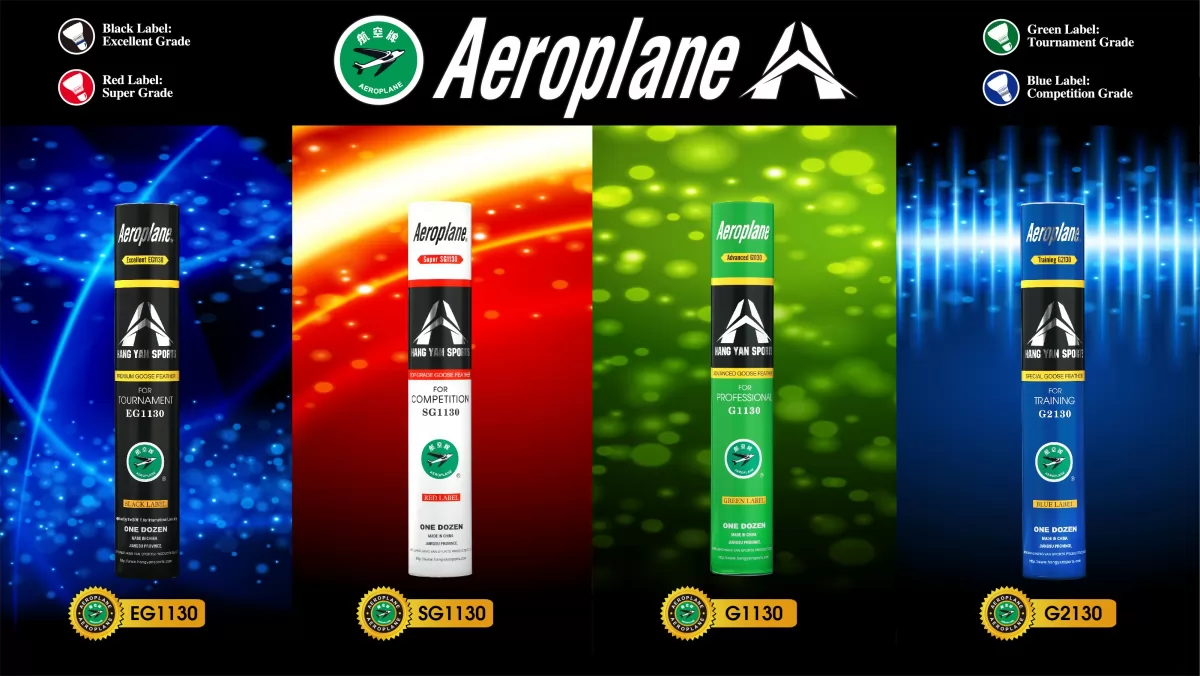
| 77 | Lightest, slowest of the three grades | Soft floating flight, gentle landing, high fault tolerance for mistimed hits | 22℃–28℃ (Spring & Summer warm courts) | Low altitude (below 500m above sea level) | Absolute beginners, long daily casual training, low-intensity skill drills, standard warm indoor courts — recommended model: G1130 Budget Training Shuttle |
| 78 | Medium weight, perfectly balanced neutral speed | Ultra-stable mid-speed flight, equal control for drops, clears and smashes | 17℃–23℃ (Autumn, mild spring, lightly heated winter venues) | Medium altitude (500m–1000m above sea level) | Intermediate recreational players, weekly club matches, regular competitive training, year-round general use — top picks: SG1130 Super Training Shuttle, G3130 Club Duck Feather Shuttle |
| 79 | Heaviest, fastest flight speed | Sharp, linear flight, exceptional thin-air resistance, tight consistent landing | 12℃–18℃ (Cold winter indoor courts) | High altitude (above 1000m above sea level) | Advanced competitive players, official tournaments, unheated cold gyms, high-altitude training facilities — BWF certified tournament options: EG1130 Tournament Shuttle, limited elite edition EG1130LE Champion Shuttle; heavy-duty training: G4130 Max Durability Goose Shuttle |
How Environment Affects Shuttlecock Speed Selection (Solve Scenario Pain Points)
Many players ask: Why does the same shuttle play drastically different in summer versus winter, or mountain cities versus coastal towns? Air density — shaped by temperature, altitude, and humidity — is the root cause. Below are actionable rules to adjust your shuttle speed based on venue conditions.
6.1 Temperature Rule (Most Critical Factor for Speed Choice)
Air density shifts dramatically with heat and cold, directly changing how far a shuttle travels when struck:
- High temperature (Summer warm courts, 22℃+): Warm air expands, becomes less dense, and creates lighter drag. A standard shuttle will fly excessively far and land out of bounds. Solution: Choose slower, lighter 77 speed to shorten flight distance and restore control. Entry-level daily training choice: G2130 Blue Label Training Shuttle
- Mild temperature (Spring/Autumn 17℃–23℃): Balanced, neutral air density delivers predictable shuttle flight. Solution: Stick to versatile 78 speed, the universal all-season baseline for most regions.
- Low temperature (Cold winter venues, below 18℃): Cold air contracts into dense mass with heavy drag; light shuttles float weakly and fall short on clears. Solution: Upgrade to heavier, faster 79 speed to counteract thick cold air and maintain full flight range.
6.2 Altitude & Humidity Rule
Altitude and humidity work together to thin or thicken air mass:
- High altitude (above 1000m): Thin mountain air offers minimal aerodynamic resistance, making lightweight shuttles rocket out of bounds. Always select 78 or 79 grade to add weight and slow overextended flight.
- Low altitude + high humidity (coastal, tropical areas): Moist, dense air creates strong natural drag. Slower 77 or standard 78 shuttles deliver steady, controllable flight without overshooting lines. For outdoor coastal play, pick windproof nylon models: M1130 Premium Nylon Shuttle or budget GH1116 Outdoor Nylon Shuttle
6.3 Venue Environment Special Cases
- Air-conditioned indoor courts: Constant regulated temperature eliminates seasonal fluctuations. Most gyms maintain 20–24℃, so 78 remains the default pick year-round; switch to 77 if cooling drops venue temperature below 17℃.
- Poorly insulated, unheated cold gyms in winter: Even at low altitude, frigid indoor air demands 79 speed to avoid weak, droopy flight on clears and smashes.
Ultimate Selection Guide: Choose 77/78/79 By Player Level & Usage
This zero-threshold guide lets you pick the right shuttle speed with one quick check, tailored to both skill and how you plan to play. If you need bulk wholesale pricing or sample inquiries for any shuttle model, visit our Contact Us page.
7.1 By Player Skill Level
Beginners (0–12 months playing experience)
Priority pick: Speed 77
Light, forgiving flight tolerates imperfect timing and weak swings. New players don’t need to overexert their wrists to get full shuttle depth, which builds solid basic stroke technique without burnout. Fast 79 shuttles force beginners to over-power every hit and develop bad hitting habits.
Intermediate Casual Players (1–3 years experience, weekly club play)
Priority pick: Speed 78
The balanced middle ground supports all shot types — precise drop shots, powerful smashes, and long defensive clears. It adapts to most mild indoor environments, making it the most cost-effective daily training shuttle for regular club attendees.
Advanced / Competitive Amateur Players (3+ years, tournament participants)
- Mild spring/autumn courts: 78
- Cold winter venues or high-altitude tournaments: 79
The heavier 79 grade holds stable flight during fast-paced, high-intensity rallies and sharp cross-court smashes, eliminating random float that can cost competitive match points.
7.2 By Usage Scenario
-
Long daily technical training sessions: 77
Reduced shuttle weight cuts repetitive wrist fatigue during hundreds of drill repetitions, keeping your stroke form consistent for longer practice windows. -
Weekly club friendly matches: 78
Versatile enough for mixed-skill groups and standard indoor temperatures, minimizing out-of-bounds errors for casual competitive play. -
Formal tournaments & winter competitive leagues: 79
Designed to counteract cold, thin indoor air in competition halls, ensuring uniform flight behavior for fair official match play (all top tournament models hold official BWF certification).
Frequently Asked Questions (FAQ — Google Featured Snippet Target)
These answers target top zero-click search questions about shuttlecock speed 77, 78, and 79, formatted for clear, direct featured snippet visibility.
Q1: Which is faster, shuttlecock 77 or 78 or 79?
Direct Answer: Speed ranking from fastest to slowest is 79 > 78 > 77. Higher grain weight equals heavier, quicker flight through indoor air, consistent with Wikipedia shuttlecock weight & speed definitions.
Q2: What is shuttlecock 77 best for?
Speed 77 is ideal for warm summer indoor courts, beginner skill drills, multi-hour casual training, and low-altitude humid coastal venues where dense air slows shuttle flight naturally.
Q3: When should I use 79 speed shuttlecocks?
Choose 79 in cold winter gyms (12–18℃), high-altitude cities above 1000m elevation, official badminton tournaments, and unheated indoor courts with low air density. Our flagship tournament lines EG1130 and EG1130LE are fully calibrated for stable 79-speed performance in cold conditions.
Q4: Can I use 78 speed all year round?
78 works as a year-round baseline for temperature-controlled air-conditioned gyms between 17–23℃. For unregulated venues:
- Summer heat above 24℃: Drop to 77 to prevent over-fast flight
- Winter cold below 16℃: Upgrade to 79 to counteract dense cold air drag
Sticking only to 78 year-round will create inconsistent flight in extreme hot or cold gym environments.
Q5: Does shuttle speed affect smash power and control?
Absolutely. Light 77 shuttles require less brute force to clear the court, making soft drop shots easier to place accurately, but powerful smashes will send them flying out of bounds. Heavy 79 shuttles absorb more smash impact, delivering tighter, more controlled steep smashes — though beginners will need extra arm strength to drive full clears with 79 speed birdies. Medium 78 balances smash power and precision for all-around play.
Final Summary & Quick Cheat Sheet
Core Recap of 77 / 78 / 79 Differences
- 77: Slow, lightweight, forgiving flight — warm summer courts & beginner training
- 78: Balanced, all-purpose neutral speed — spring/autumn, intermediate club play
- 79: Fast, heavy, thin-air resistant flight — cold winters, high altitude & tournaments
Instant Selection Cheat Sheet Formula
Venue Temperature + Altitude + Your Skill Level = Perfect Shuttle Speed
- Warm (22℃+) + Low Altitude + Beginner → 77
- Mild (17–23℃) + Medium Altitude + Intermediate → 78
- Cold (12–18℃) + High Altitude + Advanced/Competitive → 79
Choosing the correct shuttlecock speed eliminates unpredictable flight, reduces unnecessary unforced errors, and creates consistent hitting feedback that drastically improves your overall badminton experience. No more guessing shuttle numbers — use this guide to match your birdie to your court conditions every time you buy a new tube.
Connect With Us


